AI Code Review That Actually Helps (Instead of Nitpicking)
Most AI review tools generate noise. The ones that ship focus on risk, context, and reviewer time — not style lectures.
Riya's team deployed their AI code review bot with high hopes. Two sprints later, the developers had muted it. The bot argued about variable names while missing a SQL injection in the same diff. Helpful review is triage, not commentary. Models excel at pattern surfacing — risky diffs, missing tests on hot paths, inconsistent error handling. They fail at taste and tribal knowledge unless you ground them in your standards.
Make it useful
- Scope diffs — only changed files; include test changes
- Repo context — AGENTS.md, security rules, banned patterns
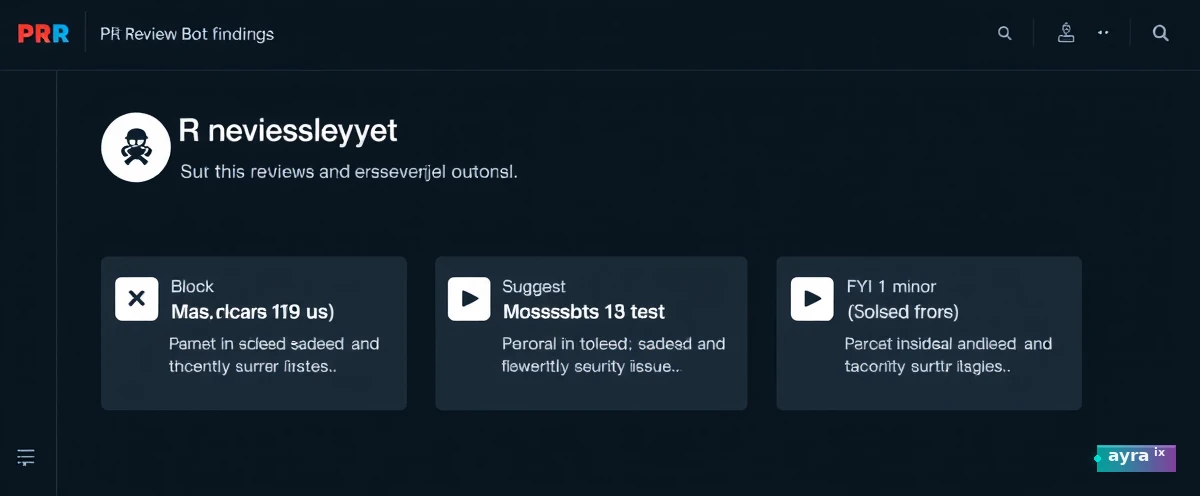
- Severity labels — block vs. suggest vs. FYI
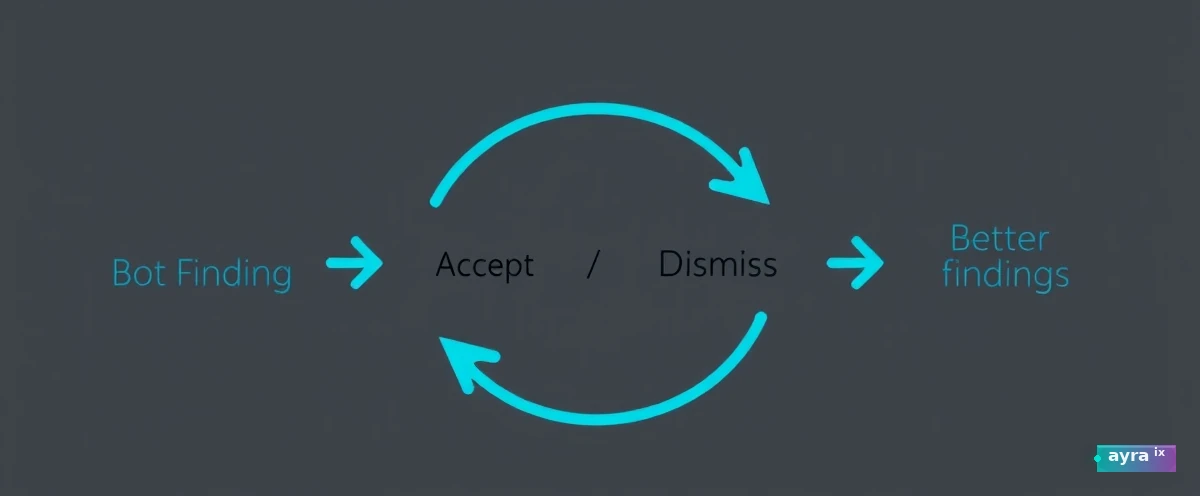
- Feedback loop — thumbs down trains what to shut up about
Review bots earn trust by being wrong less often than junior hires — not by being verbose.
Context the bot actually needs
Dumping a raw diff without repo context is how you get style lectures on generated protobuf. Feed the bot: changed files, related tests, security policy excerpts, recent incidents in this module. Scope beats volume — a focused 8k context beats a blind 128k dump.

AI review should mirror how a good senior engineer triages — security and data paths first, tests second, nitpicks never unless asked. Encode that priority in prompts and in what you suppress when developers thumbs-down noise.
- Hot path detection — auth, billing, PII modules get stricter review
- Test diff required — no test changes on risky modules? flag automatically
- Dependency awareness — note when PR touches shared libraries
- False positive budget — track mute rate; tune when it climbs
Developers trust review bots that shut up — not bots that perform intelligence.
Closing the loop with humans
When a human catches something the bot missed, capture that pattern — add to rules, add to eval PRs, adjust severity weights. Review AI is a product with users (your devs); treat feedback like feature requests, not annoyance.

Publish weekly stats — findings accepted, findings dismissed, mean time to merge. Leadership sees risk reduction; developers see less noise. Same discipline as prose tools that suggest but don't publish: the bot stops at merge authority.
| Metric | Healthy |
|---|---|
| Accept rate on blockers | 70%+ |
| Mute rate on nits | Trending down |
| Missed bugs caught in retro | Trending down |
Integration with existing quality gates
AI review sits after linters, before human eyes — not instead of either. Configure linters to own style; configure the bot to own risk. Overlap creates mute fatigue.
Map bot findings to SARIF or your review UI's native format. Friction in viewing findings equals findings ignored. Meet developers where they already review.
Security findings need owners
Blocker findings should route to security champions per repo, not vanish in general channel noise. SLA for triage — 24 hours on critical, same as any vuln report.
A finding without an assignee is a finding that ships.
Onboarding new repos
Each repo needs AGENTS.md or equivalent — banned patterns, security hotspots, test expectations. The bot reads what you give it; garbage context, garbage findings.
First week on a new service, tune mute reasons. Week two should be quieter than week one.
Merge without bot fatigue
Developers merge when blockers are zero or waived with ticket. Waivers need audit trail — who accepted SQL risk and why. Review bot becomes accountable like human reviewers, not wallpaper.
Developers forgive missed nits; they don't forgive blocked merges for nonsense. Tune aggressively in the first month. A quiet bot that catches one SQL injection beats a chatty bot that catches none.
Track time-to-first-human-review with bot on vs. off. Helpful review reduces human load; noisy review adds it. If median review time rises, tune severity before developers revolt. Celebrate weeks with zero false-positive blockers — that is the metric that matters.
Judge the bot by its mute rate, not its word count
Cap findings at three per PR, rank by severity, and route blockers to an owner with a 24-hour SLA — the same discipline you'd demand of a human reviewer. A quiet bot that catches one SQL injection beats a chatty one that catches none, and developers will tell you which is which within a week of shipping it.
Track accept rate on blockers and mute rate on nits every week, out loud. When mute rate climbs, tune the prompt before developers route around the tool entirely. Trust is earned one correct blocker at a time, and lost the same way.
Developers forgive missed nits; they don't forgive blocked merges for nonsense. Tune aggressively in the first month.
Your move: This week, run your existing AI code review tool on a PR and categorize every comment as signal or noise. If noise exceeds 30%, reconfigure the prompt to suppress style checks entirely — focus on bugs, security, and architecture. Then measure whether the remaining signal actually changed what landed in main.
Stay with us · pushback
Do You Trust Your AI Code Review Bot More Than a Junior Developer?
How often do you trust your AI code review bot to catch critical issues compared to having a junior developer review the code? Share your experience.
No account needed — pick a take, then keep reading. We rotate these prompts so each piece feels like a conversation, not a clone.