Open-Weight Convergence: The Models Are Similar — Now What?
The gap between top open models narrowed in 2026. Your moat was never the weights — here's what actually differentiates.
Open-weight leaders traded crowns every quarter until the charts started rhyming. Qwen, Llama, Mistral, DeepSeek — pick your flavor, run your quant, get surprisingly similar answers on the work that pays the bills. Convergence is real. If your strategy was "we'll win because our model is smarter," you need a new strategy.
Here's the thing: enterprises never bought intelligence in isolation. They bought integration, governance, latency SLAs, and someone to call when the CFO asks why finance bot quoted the wrong quarter. Open weights made the engine commodity. The car is still yours to build.
Where differentiation moved
- Private data flywheels — curated corpora, feedback loops, eval sets from your failures
- Routing — fast model default, escalate on uncertainty; see waterfall patterns
- Tool surfaces — MCP servers, SAP connectors, audited write paths
- Operations — hosting, cost controls, model pinning, incident response
Convergence is liberating — you can swap weights without rewriting your world. That's only an advantage if your world isn't just a prompt.
Stop treating model swaps like rewrites
When open weights converge, your upgrade path should look like changing a database driver — swap, regression test, roll back if needed — not like replatforming your entire product. That only works if your moat isn't prompt-string deep. Tool contracts, eval harnesses, and data pipelines must outlive any single checkpoint.


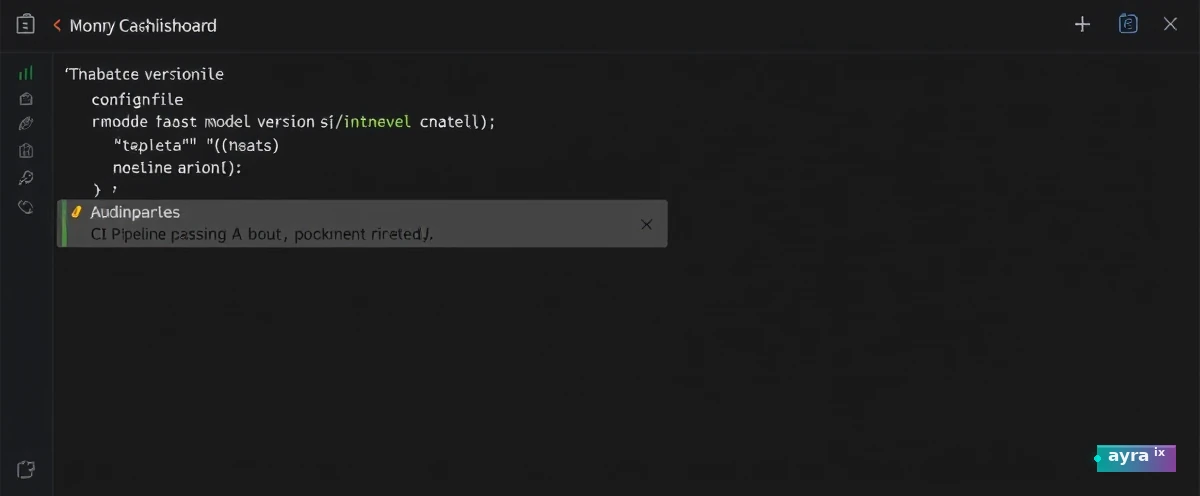
Here's the thing: maintain a model abstraction layer with pinned versions in config, not hardcoded in application code. Your orchestrator should log which weights answered which request. When Qwen beats Llama on your eval set next quarter, you want a one-line config change and a green CI run — not a sprint.
- Eval gates — no model promotion without passing your private suite
- Quant discipline — document VRAM, latency, and quality per quant; don't chase the smallest file
- Fallback chain — primary open, secondary open, cloud escape hatch
- License awareness — open weights aren't all the same legal shape for your use case
Convergence rewards teams who invested in systems. It punishes teams who invested in hype tweets about which model is king this week.
Where to spend the budget you saved on API bills
Redirect savings into domain data curation and integration depth. Fine-tuning is rarely step one; clean eval sets and better retrieval usually beat another LoRA run. Your proprietary process diagrams, ticket resolutions, and policy interpretations are the compound interest — weights are renting intelligence.
What this means for you: quarterly, run the same workflow on two converged open models and your cloud baseline. If they're within noise on accuracy but diverge on latency or cost, pick for operations — not leaderboard ego. The model is a commodity. Your orchestration isn't.
Build vs. buy revisited
When weights converge, hosted APIs compete on margin alone — your open stack competes on control. Re-run the build vs. buy calc with realistic ops headcount. Free weights aren't free if you need two FTEs to keep inference boring.
What this means for you: hybrid is fine. Open for bulk, cloud for spikes, proprietary for regulated niches. Convergence makes swapping easier — use that freedom to optimize cost, not to chase leaderboard vanity every month.
Community and security patches
Open weights mean you own patch velocity. Critical CVE in a dependency? No vendor email — you watch mailing lists. Budget security review for model supply chain same as application dependencies.
What this means for you: subscribe to model card updates and framework security advisories. Convergence doesn't reduce ops — it relocates it to your team.
Your moat is the system around the weights — eval, data, tools, and the team that operates them.
What this means for you: stop roadmap items that are only "upgrade model." Start items that improve recall, routing, or integration depth.
Run two open models on your eval set this week. If they're within noise, stop debating leaderboards and invest in the Tools layer — that's where your users actually live.
Spend the API savings on data, not leaderboards
If Qwen, Llama, and Mistral are within 5% of each other on your internal eval, the leaderboard debate is over — and so is the excuse to keep treating "upgrade the model" as a roadmap item. What this means for you: redirect the budget you saved on API bills into domain data curation and eval sets built from your own failures. That's the 10x gap between best model and best system, and it's the only one still worth chasing.
Here's the thing: pin your model versions in config, not code, so swapping weights looks like changing a database driver — test, roll back, move on. Convergence didn't kill your moat; it just told you where it actually was.
Your move: Audit your current model selection process. If you picked your model because it was the best six months ago, re-evaluate — the gap has narrowed or vanished entirely. Choose based on your deployment constraints (GPU memory, latency, fine-tuning ease) rather than benchmark score. The model you can actually run, fine-tune, and debug in-house will outperform one you can only call via API.
Stay with us · pushback
What's Your Approach to Model Convergence?
How do you plan to adapt your AI strategy in light of model convergence? Are you focusing on the right areas for differentiation?
No account needed — pick a take, then keep reading. We rotate these prompts so each piece feels like a conversation, not a clone.