Your Demo Used Twelve Tools. Production Needs One Job.
Demos sell possibility; production buys reliability. Every tool you add multiplies failure modes, latency, and permission scope.
Marcus stood at the whiteboard, demo still glowing on the screen behind him. The board had loved it: agent reads email, checks CRM, updates Jira, drafts reply, schedules meeting, orders lunch. Then the CISO leaned forward. "Who owns the failure when step four books the wrong room in Zurich?" Nobody had an answer.
Here's the thing: demos sell possibility; production buys reliability. Every tool you add multiplies failure modes, latency, and permission scope. The honest pitch isn't "digital employee" — it's "this one workflow, 40% faster, with a human on the send button."
How to demo honestly
Show the happy path on one job. Show the stop condition when confidence is low. Show the audit log. Apologize for none of it — that's the product.

If you can't name the on-call owner for each tool call, cut tools until you can.
Stakeholders remember the montage. Finance remembers the incident. Build for finance.
Ownership per tool call
Every tool in the demo needs a named human owner, an on-call rotation, and a rollback story. Twelve tools means twelve APIs that change without asking your agent. When Jira updates field schemas and your demo breaks mid-keynote, who gets paged? If the answer is "the AI team," you have twelve single points of failure wearing a trench coat.

Here's the thing: production agents fail at integration boundaries, not at the LLM. Collapse the demo to one job, one primary tool, one human approval step. Save the montage for the sizzle reel — ship the narrow path.
- Failure isolation — one tool down shouldn't poison the whole chain
- Compensating actions — if calendar fails, draft still saves for manual send
- Latency budgets per step — users won't wait 45 seconds for lunch ordering
- Permission minimization — demo accounts still leak; scope them
The board remembers the montage. Support remembers which integration broke at 4pm Friday.
Translating wow into roadmap
After the demo applause, run a ruthless prioritization session: which single step saved the most time in the pilot user's week? Build that. Deprioritize the rest without guilt — they're sequels, not launch blockers. Honest roadmaps say "Q3: email-to-ticket draft" not "digital employee."
What this means for you: measure production readiness in mean time to diagnose, not feature count. One reliable workflow with logs beats twelve flaky tools that impress investors. Compare to focused utilities that do one job — that's the energy your agent should copy.
Would you trust this workflow with your own calendar? If not, cut tools until you would.
Stakeholder education
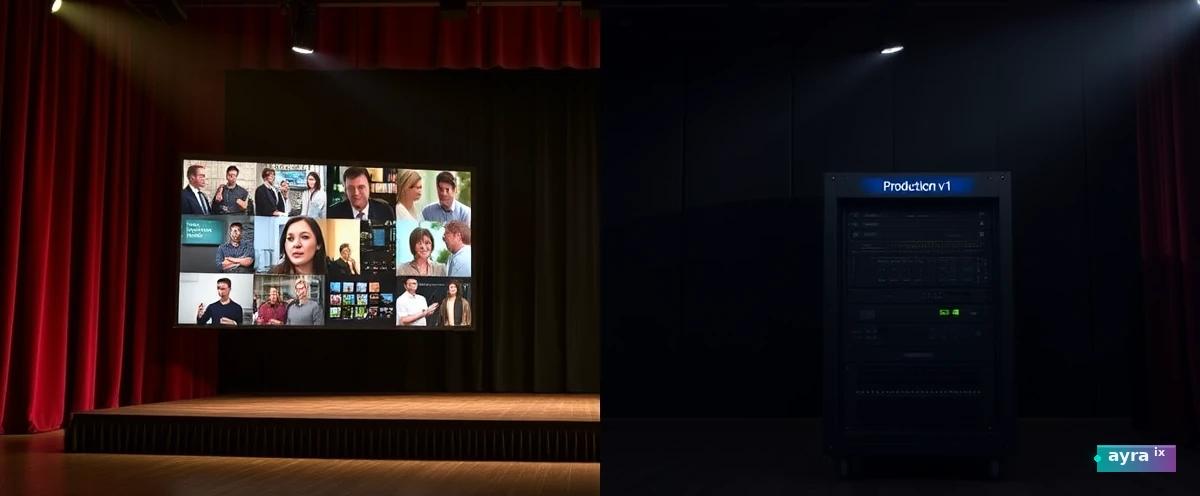
Teach sponsors the reliability difference between montage and workflow before the demo, not after the incident. One slide: tools in demo vs. tools in production v1. Manage expectations like you manage scope — or production will disappoint by design.
What this means for you: celebrate narrow wins publicly. "Agent drafts ticket from email" ships; "digital employee" waits. Honest storytelling keeps budget for iteration instead of apology tours.
Integration test matrices
Twelve tools means combinatorial test paths. You can't ship without pairing tests — tool A then B, B failure during C, timeout on D. Production is a state machine; demos skip edges.
What this means for you: collapse tools before writing tests, not after incidents. One job, one matrix you can actually run nightly.
Demos are trailers. Production is the movie where the protagonist owns one job and a pager.
What this means for you: cut the montage before you cut scope — stakeholders adapt to honesty faster than to outages.
Post-demo contract
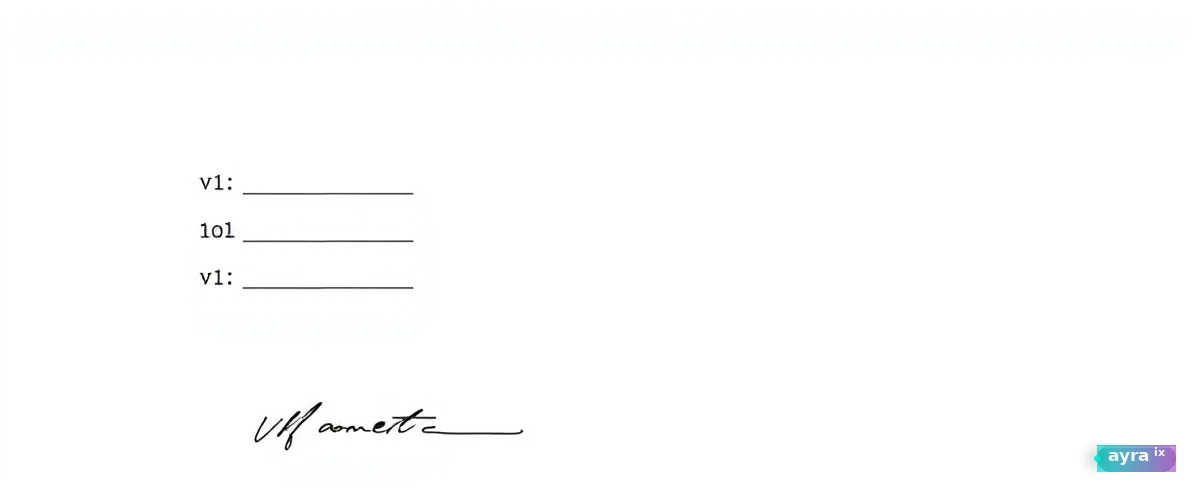
Sign an internal scope letter with sponsors: v1 job, v1 tool, v1 owner, v1 metric. Anything not on the letter is phase two. Prevents "but the demo did twelve things" six months later when nothing is reliable.
Here's the thing: production agents earn trust one workflow at a time. Each added tool is a vendor relationship, a credential rotation, and an on-call rotation. Collapse early, measure reliability, expand only when v1 is boring. That's how demos become products instead of postmortems.
Compare to focused utilities — a good one does exactly one thing without pretending to run your calendar. That's the production energy.
Sign the scope letter before the sequel gets greenlit
Twelve tools in the demo means twelve vendor relationships, twelve credential rotations, and twelve 4pm-Friday pages nobody signed up for. What this means for you: write the v1 scope letter — one job, one primary tool, one named on-call owner, one metric — and get sponsors to sign it before the applause fades. Everything else is phase two, not a broken promise.
Here's the thing: rehearse the failure path in the demo room, not just the happy path. Sponsors who watch step four gracefully stop and hand off to a human trust the production version more than the one that pretended nothing could go wrong. That trust is what buys you budget for the sequel.
Your move: Draw your current AI pipeline as a dependency graph — every service, every API, every library. Count the nodes. Then cross out every one that is not strictly required for a successful production run. The remaining graph is your production architecture. The crossed-out nodes are your demo complexity. Ship the minimal graph first; add sophistication only when the data proves you need it.
Stay with us · pushback
Do You Agree: Less is More in AI Workflows?
What do you think about simplifying AI workflows by reducing the number of tools used? Is it more important to showcase multiple capabilities or ensure a reliable, single workflow?
No account needed — pick a take, then keep reading. We rotate these prompts so each piece feels like a conversation, not a clone.