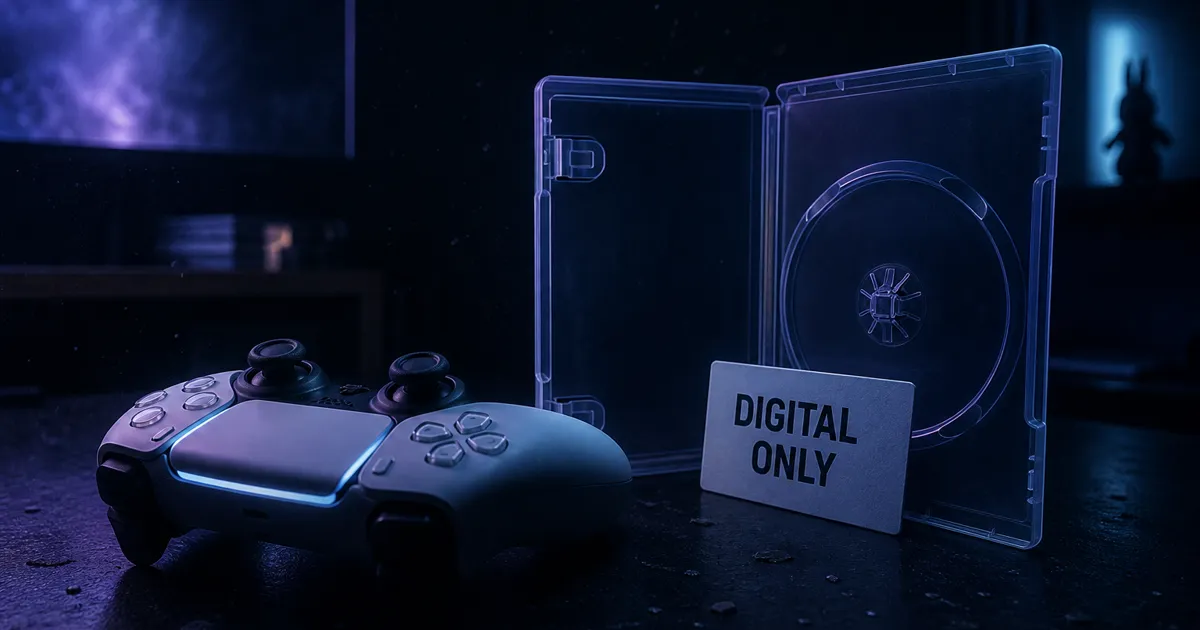
Be honest for a second. When was the last time you paid seventy dollars for something and could still lend it to a friend, sell it when you were done, or keep it after a storefront died? Not “access.” Not “license.” Own.
If that question makes you uncomfortable, good. Sony just made it impossible to dodge.
On July 1, 2026, PlayStation said it will stop manufacturing physical discs for new games starting January 2028. Boxed retail, if it survives at all, becomes a cardboard sleeve around a download code. Sony’s CFO later told investors they’re “cautiously” moving forward anyway — after nearly a month of radio silence while the community set fire to every official post.
The wedding video after the divorce
In 2013, Sony put Shuhei Yoshida on camera handing a disc to a colleague. That was the whole bit. Simple. Shareable. A public dig at Xbox’s then-restrictive digital policies. Jack Tretton told a room that when you buy a PS4 disc, you can trade it, sell it, lend it, or keep it forever. Standing ovation.
Gamers are resurfacing those clips now. One comment cut through the noise: “This is like watching the wedding video after the divorce.”
That’s not nostalgia. That’s a receipt. Sony sold you a moral position — ownership as consumer virtue — then spent a decade training you to accept the opposite. The disc decision isn’t a sudden betrayal. It’s the moment they stopped pretending.
What “digital preference” actually means
Sony’s public line is consumer trends. Digital already dominates. Physical revenue for PS4/PS5 full games is a fraction of download revenue. Fair — as accounting.
Here’s the part they don’t put on the blog: preference under monopoly conditions is not free choice. Convenience is real. So is the slow removal of every exit. You didn’t vote to kill used games. You voted for not driving to a store. Sony counted that as consent to end the alternative.
There is a difference between players accepting a shift because they see value in it, and having it forced by deleting the option. — Morningstar equity research, on the console vs PC distinction
On PC you still have Steam, Epic, GOG, itch, physical specialty shops. On PlayStation you have Sony’s store, Sony’s account, Sony’s rules. Closing the disc isn’t “matching PC.” It’s locking the last unlocked door.
The seven billion dollar quiet part
Analysts put the global second-hand gaming platform market around $7.2 billion in 2025. Used copies weren’t a side hustle. For a huge share of players they were how you afforded the next launch — trade in last year’s $70 mistake, put cash toward this year’s hope.
Kill the disc and that loop dies. Brick-and-mortar game retail gets thinner. Kids who buy used because parents won’t drop launch price get priced out. And Sony’s software margins look prettier for investors who never had to sell a used copy to eat that week.
Wedbush’s Michael Pachter said the quiet part out loud: the consumer pays the tax in optionality. Sony saves manufacturing. You lose the right to exit.
They can already take things back. Still buying?
This is where it stops being a format debate and gets raw.
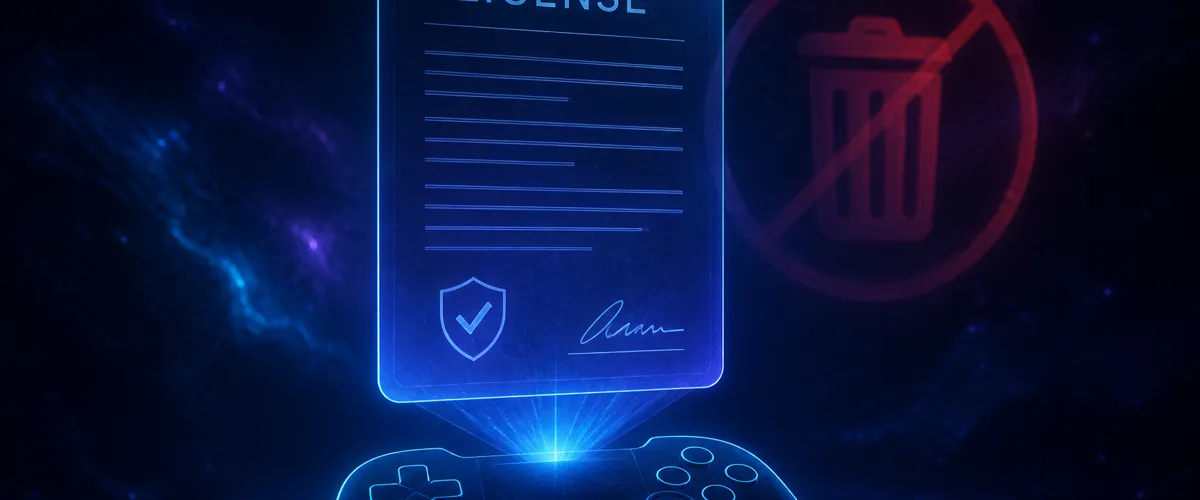
Sony is removing hundreds of film and TV titles from the PlayStation Store — purchases that sit in libraries until licensing says otherwise. In parts of Europe, inactivity policies can close accounts and take purchases with them. Delistings already erase digital storefronts without a garage-sale alternative.
So ask yourself the question Sony hopes you never finish:
If they can yank a movie you paid for, what sacred protection does your digital game have that a licensed film doesn’t?
Ubisoft’s Philippe Tremblay told players to get comfortable “not owning your game.” The backlash was loud. Sony’s move is quieter and more permanent. Same destination. Better PR.
What would you actually do?
There’s a boycott week forming — #PSBlackout, late August 2026. Some will sit out. Most won’t. That’s the ugly truth about platform lock-in: outrage is free; switching costs aren’t.
So don’t perform virtue in the comments. Answer like it’s your money:
- Do you still pre-order a $70 digital launch knowing the box might just be a code?
- Do you keep a physical backlog while you still can — or admit you already lived digital-only?
- Would you move platforms for ownership, or is exclusivity worth the leash?
- If your entire library vanished tomorrow because of a ToS clause, who would you blame — Sony, or the version of you that kept clicking Buy?
A little dark humor, because the alternative is screaming into a void: congratulations. Your library is a terms-of-service PDF with haptic feedback.
Sony isn’t confused. Margins love digital. Investors love digital. Preservationists, collectors, broke teenagers, and anyone who ever lent a game to a cousin lose. The company that once sold you ownership as identity now sells you convenience as destiny.
Your move: Before the next checkout screen, answer one question without hedging — if this purchase can’t be lent, sold, or kept after Sony changes its mind, are you buying a game… or renting a feeling?