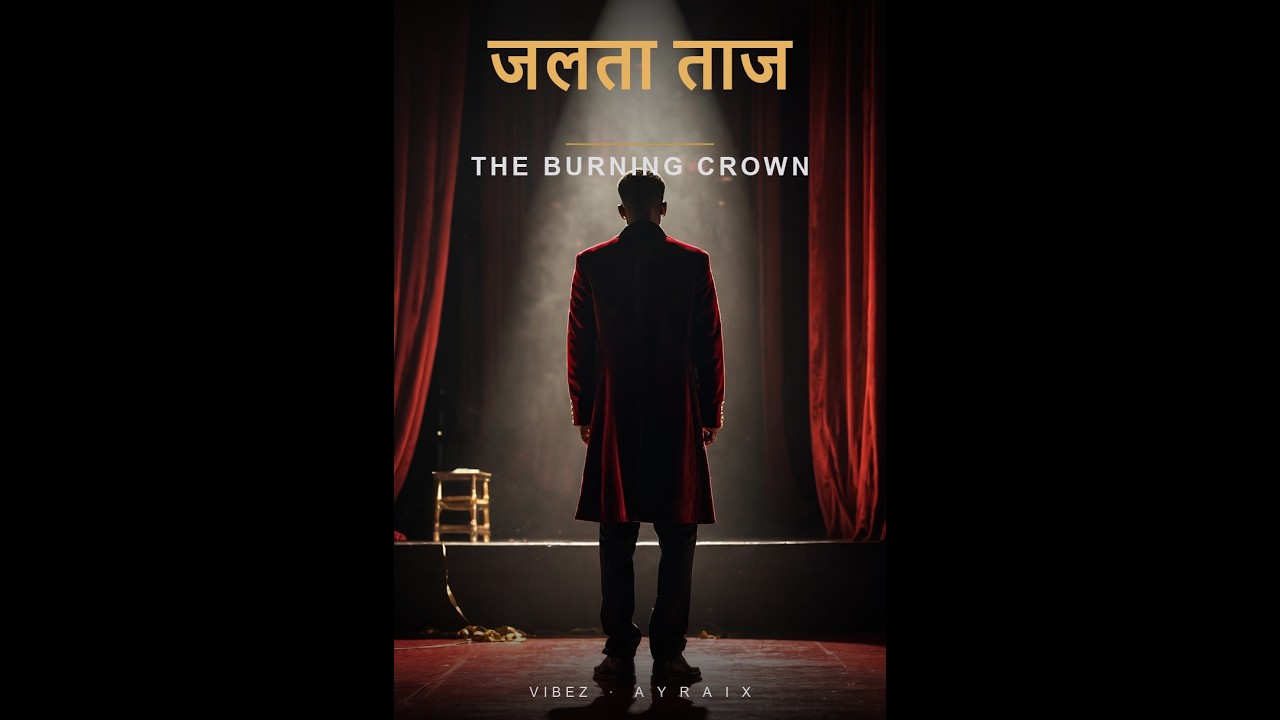
He won every stage. He lost the only person who was ever really watching. This is the story inside the Hindi sad rap, and the people who still live inside its silence.
There is a chair in the front row of every show he has ever played. It is the best seat in the house. It has never once been filled.
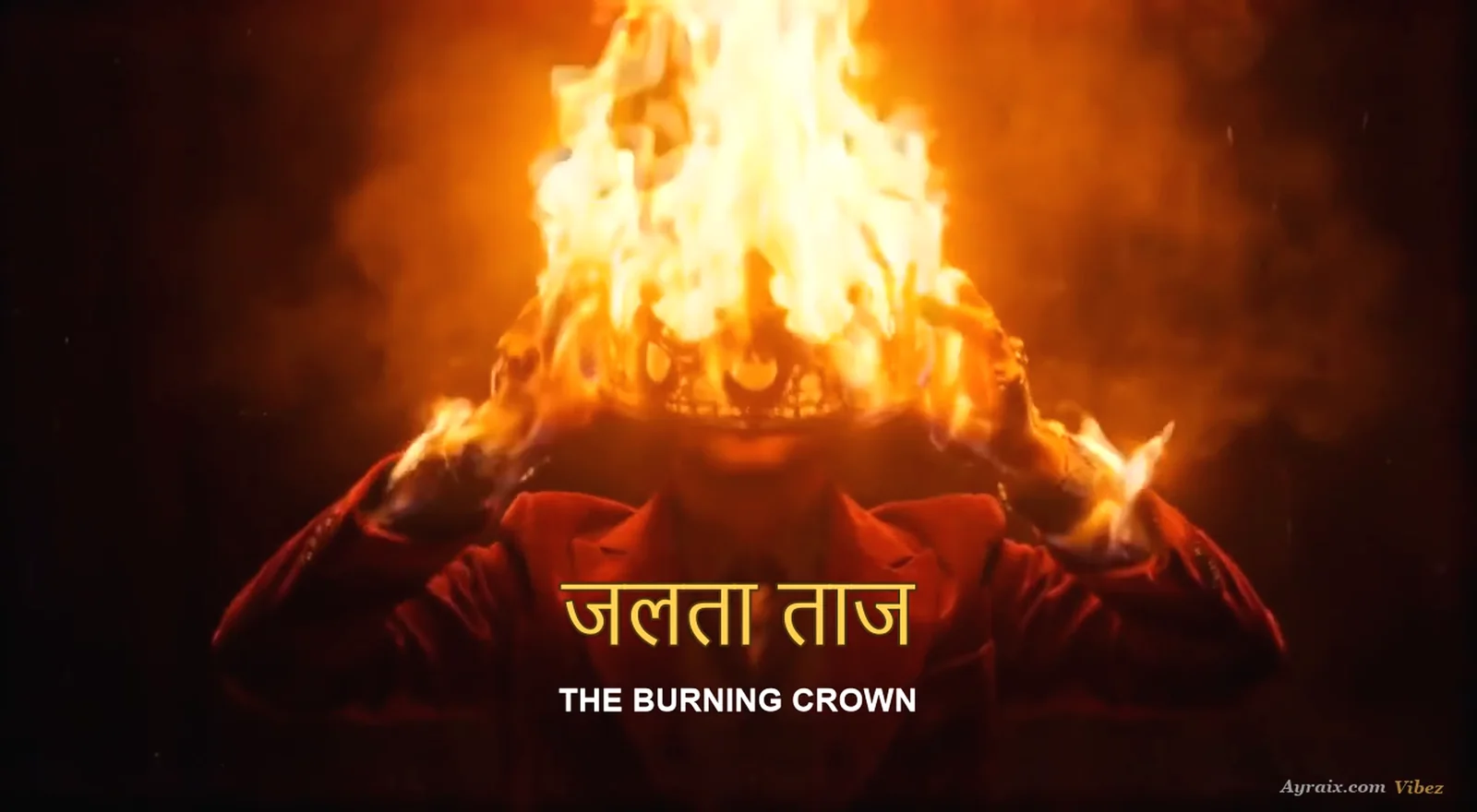
This is the story behind जलता ताज — The Burning Crown, the first original release from Ayraix Vibez. A song about a man who got everything he ever asked for, and the one thing he never asked for enough — a person, not applause — that he lost along the way.
The Burning Crown is not really about a famous man. Fame is only the light that makes the absence visible. Underneath the medals, the crowds, and the burning gold is a smaller, older story: a person who was believed in before there was anything to believe in, then forgotten while he was busy becoming undeniable.
"तालियों का शोर मुझे छलता रहा, तू नहीं थी तो यह ताज जलता रहा"The roar of applause kept deceiving me — you weren't there, so this crown kept burning.
The applause kept deceiving him. Without her, the crown kept burning. That is the emotional law of this song: public victory cannot repair private abandonment.
He held that line the way other people hold onto scripture — carried it into every empty room, every rejected demo, every night the mic felt like the only place left where the truth could get out of him. She believed in the artist before there was any proof one existed. That kind of belief doesn't ask to be paid back. It just changes what a person is willing to survive.
The stage, before anyone knows his name. This is where it starts.
The co-star · the face behind the empty chair
The co-star behind the story
She is not a side note. She is the heart of the story.
Before the crowd, before the crown, there was her. She knew the unfinished version of him: the pauses, the doubt, the lines that did not land. Her presence belongs here because she is part of the story, not just a symbol of what is missing. The chair is what remains after a real person has been loved, seen, and missed.
Her absence gives every victory its strange temperature. He can stand in the brightest room in the world and still look toward the place where she used to be.
Before the medals, this is what "them" actually looked like: rooftops, not arenas. Two people and a skyline that belonged to no one and everyone — the kind of view that costs nothing and feels like it should cost everything. She loved the city at that exact hour, when the towers were just glass and light and nobody's ambition yet.
He used to write with her half-listening beside him, more interested in the skyline than in whatever verse he was fighting with that night — and somehow her not-listening was the most useful feedback he ever got. She had this way of tilting her head back and just looking at the city, like she already knew it was going to give her everything she wanted. He wrote that tilt into three different songs before he ever admitted why.
She is not background to his journey. Her presence gives the story its emotional center.
Her — the memory he keeps returning to, long after she's gone.
The character atlas
Everyone in this story is carrying one kind of hunger.
Some characters have faces. Some are symbols. All of them are trying to answer the same question: who is this victory for, if the person you wanted beside you is gone?
01 / THE ARTIST✦
He became loud enough to disappear.
He is the protagonist, but not the hero he thinks he is. Before the stage, he is a person with noise in his head and one witness who tells him that noise can become music. After the stage, he has the world’s attention and no idea where to place his own grief.
His tragedy is not that he wanted success. It is that he used success as a message to someone who had stopped listening. Every new medal says, look what I became. Every empty seat answers, I know. I just cannot come back.
His wound · mistaking visibility for intimacy
02 / THE CO-STAR☽
She loved the person before the proof.
She is mostly memory, which is why she feels larger than a biography. The song does not give us a villain, a final argument, or a door slammed shut. It gives us the more painful kind of departure: she simply stops being in the room.
She heard him when the mic was still an empty promise. Her belief becomes sacred because it asks for no repayment. And when he finally has the world’s approval, he discovers that her particular kind of seeing cannot be recreated by an audience.
Her power · she made survival feel worth attempting
03 / THE CROWD◌
Thousands of hands. Not hers.
The crowd is not evil. It is simply enormous, and size changes the texture of approval. The audience gives him exactly what he once asked the universe for: strangers repeating his name as if they know him.
But applause is a strange kind of love. It arrives on cue. It disappears when the lights cut. It can make a lonely person feel chosen while never knowing what they are choosing.
Their limit · they can witness the performance, never the private cost
04 / THE EMPTY CHAIR□
The quietest character is the loudest.
The chair is not a prop. It is the physical shape of a promise that was never spoken aloud: when it happens, you will be there. He keeps returning to it because grief prefers objects. Objects cannot contradict you. They hold the exact outline of what is missing.
Years later, when everyone has gone home, the chair is the only witness left that remembers who he wanted to impress.
Its truth · absence can become a place you visit
05 / THE CROWN♛
It does not burn because it is heavy. It burns because it is unwitnessed.
The crown contains the entire contradiction. It is the proof that he won. It is also the proof that winning did not bring her back. In another story, gold is reward. Here, gold is heat. The thing he spent his life reaching for becomes the thing he cannot hold without pain.
Its meaning · achievement without the beloved becomes another kind of loss
Listen before reading on
Let the empty chair arrive first.
The song is the primary text. This page is a way of hearing the spaces between its lines.
The story does not move from love to hate. It moves from being seen, to being celebrated, to understanding that those are not the same thing.
Beat one · Before any of it
She hears the artist before the world hears the song.
There are no medals yet. No lights, no headlines, no reason to stay except the person himself. Her faith arrives early, which is why it becomes the standard every later form of praise fails to meet.
"तूने कहा था बड़ा कलाकार बनूँगा मैं"You said I'd become someone. Not the world. You said it. The promise he carries into every empty room.
Beat two · The rooftop years
Love lives in the details nobody applauds.
A skyline after work. A half-listening companion. The tilt of her head while he fights with a verse. The song understands that a relationship is not made of grand declarations; it is made of tiny permissions to be unfinished in front of someone.
People assume the hardest part of losing someone is the big, loud absence — the empty side of the bed, the second coffee cup nobody reaches for anymore. It isn't. It's smaller than that. It's a skyline he can't look at the same way anymore, because for one specific stretch of his life, a specific person made it mean something.
Every rooftop after her is just a rooftop.Memory changes the geography of a city
Every rooftop in the city, and she always found the one with the best view.
Beat three · The arrival of fame
The wave comes in. It does not ask who is still on shore.
One song becomes a hundred thousand people. Then arenas. Then the strange intimacy of strangers screaming the same words. He receives the life he promised her he would build, but the person who made the promise meaningful is no longer in the front row.
Somewhere between the first sold-out night and the hundredth, he stopped checking the crowd for one particular face. And when he finally did look — really look — the seat that mattered most in the entire building was empty. She hadn't left with a scene. There was no fight to point to, no single night he could blame. She was simply, quietly, no longer there.
He got exactly what he told her he would become.And still, the victory feels like a sickness of losing
The crowd he won. Thousands of hands. Not the one he needed.
Beat four · The chase
He does not chase her. He chases proof.
More shows. More headlines. More rules broken. He tries to become so visible that her absence will have to acknowledge him. This is the most human mistake in the song: believing that enough achievement can reverse-engineer a feeling.
"तू छोड़ के गई जब, मैं तोड़ा हर एक नियम"The day you left, I broke every rule I had left to break. Fame and love are not the same equation.
She didn't slam a door. She just stopped being in the room.
Beat five · After the lights
The confession finally has no audience.
When the arena empties, the truth gets louder. One smile from her would have made the whole world feel closer than the whole world’s approval ever did. He returns to the chair, not the applause. The song ends when he stops trying to be seen by everyone and sits with the one person he cannot reach.
"तू एक बार मुस्कुरा के दे देती मंज़ूरी, तो इस पूरी दुनिया से कम होती ये दूरी"If you'd smiled at me just once, given me that one nod of approval — this whole world would have felt closer than it does now.
"सब चले गए, बस एक खाली कुर्सी बची है — तेरी वो कुर्सी"Everyone's gone now. Only one empty chair remains. Yours. The crown is still burning. He is finally looking at the fire.
After the crew goes home. After the lights cut. Just the chair.
The song, line by line
For anyone hearing जलता ताज for the first time.
Here is the shape of the story as it plays — from the last quiet second before the curtain, to the chair that remains.
Intro
An empty stage. The curtain parts. The applause hasn't started yet — this is the last quiet second before everything changes.
Verse 1
He remembers her promise — "you'll become a great artist" — and the medals that followed. But the win already feels hollow: "यह जीत भी मुझे हार की बीमारी लगती है" (even this victory feels like a sickness of losing).
Chorus
The wound at the center of the song: applause that deceives, a crown that keeps burning because she isn't there to see it. He's won everything and lost her — and the loss is the only thing he actually feels.
Verse 2
After she leaves, he spirals into the work — writing recklessly, breaking his own rules, chasing visibility as if enough of it could reach her. Fame grows. The distance grows faster.
Bridge
The lights cut. The room empties. He admits the thing the whole song has been circling: one smile from her would have closed more distance than the whole world's applause ever did.
Outro
Everyone's gone. One chair remains — hers. The song ends where the video does: not on the crowd, but on the empty seat that was never really about the seat at all.
The central symbol
A crown is only beautiful when someone you love can see it.
That is why the title hurts. The crown is not a punishment for ambition. He was never wrong to want the stage. The pain is that he made the stage into a letter addressed to one person, then kept sending it after the address stopped existing.
The Burning Crown isn't really a song about fame. It's a song about the exact moment someone realizes that everything they built to be loved by everyone accidentally cost them the one person whose love was never up for negotiation to begin with. Not because the crown burns. Because he does.
He has the world’s approval. He does not have hers. No amount of the first has ever substituted for the second.
What the song leaves behind
The story is not asking you to choose between love and ambition.
It is asking what you have quietly turned into a message for someone who may no longer be listening.
For the artist
Make the thing because it is true, not because one person’s return is hidden inside the reward. Otherwise every success carries a private invoice.
For the believer
Being the first person to see someone can change their life. But belief is a gift, not a contract. You are allowed to leave before the world arrives.
For the audience
Applause can witness a performance. It cannot claim a person. The most generous thing a crowd can do is remember that the performer goes home alone.
He comes back for the chair. Not the applause. Never the applause.
Maybe the burning crown is not the prize he won. Maybe it is the moment he realizes he was still performing for someone who had already gone home.
The Burning Crown · jalta taaj · Ayraix Vibez
Ayraix Vibez
This is our first original story
The Burning Crown is the debut release from Ayraix Vibez — original Hindi music stories, told the way we tell everything else: honestly, and without the hype.