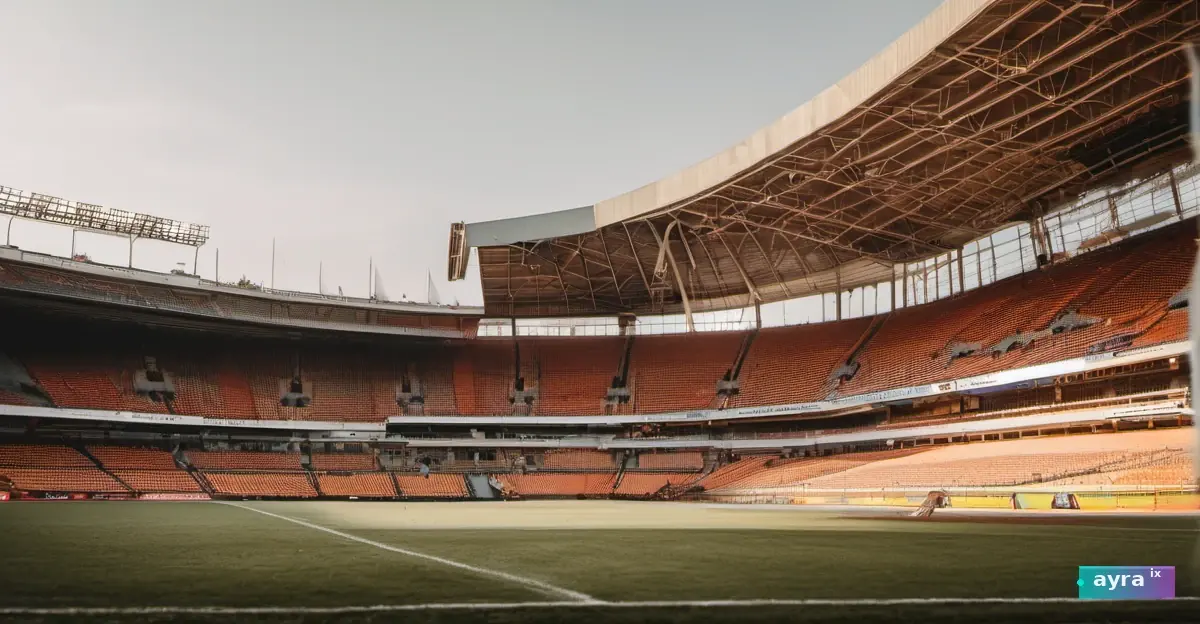
July 22, 2026 — AT&T Stadium, Arlington, Texas. The pitch temperature at kickoff was 132°F. The cooling system — a ring of massive industrial misters installed specifically for this tournament — had been running at full capacity since 6:00 AM. By the 35th minute, a midfielder for the Netherlands collapsed on the sideline, surrounded by medical staff with ice towels and a portable fan. FIFA's medical protocol triggered an automatic "cooling break" at the 30-minute mark, the fourth such break in the tournament's first week. The match continued. The temperature did not drop.
The 2026 FIFA World Cup — the first hosted across the United States, Canada, and Mexico — was supposed to be the most commercially ambitious tournament in history. Instead, it has become the most visible cultural proof that climate change is no longer a future abstraction. It is here, on the pitch, in the stands, in the medical tents, and in the billion-dollar infrastructure decisions that every host city is now questioning.
Soccer Was Always an Outdoor Sport
This is the uncomfortable fact that the sports industry has spent decades avoiding. Unlike American football, which can be played indoors, or basketball, which was designed for climate-controlled arenas, soccer is fundamentally an outdoor game. The pitch is exposed. The players run continuously. The match clock does not stop for weather. FIFA's own medical research has established that performance degradation begins at 86°F and becomes dangerous above 100°F. The World Cup is being played in cities that routinely exceed both thresholds during the tournament's summer window.
The response has been a patchwork of technological bandaids: misting systems on sidelines, mandatory hydration breaks, heat-acclimatization protocols for teams arriving from cooler climates, and a match rescheduling system that has pushed nearly a third of group-stage games to 9:00 PM or later. But these measures treat the symptom, not the cause. The cause is that summer temperatures in host cities have risen by an average of 4.7°F since the US hosted the World Cup in 1994. The same cities, the same stadiums, thirty-two years apart — an entirely different climate.
The Cooling Arms Race
Every host nation that wants to compete in future summer events is now investing in stadium cooling technology at extraordinary scale. Qatar's 2022 air-conditioned stadiums were dismissed as gimmicks. In 2026, they look like foresight. The AT&T Stadium cooling system cost $12 million and can lower the field-level temperature by 15°F — but it requires so much electricity that it doubles the stadium's carbon footprint for every match day. This is the paradox: the solution to heat-exacerbated sports is carbon-intensive, which makes the underlying problem worse.
Professional leagues are already adapting in ways that don't make headlines. MLS now schedules its season to avoid summer afternoon matches in southern markets. The Premier League is studying a winter break extension. The IOC has moved the 2026 Youth Olympics entirely to winter to avoid heat risk. These are incremental changes, but they point to a structural shift: the implicit assumption that outdoor sports can be played anywhere, anytime, is breaking down.
The Human Cost
The stories that don't make the highlight reels are the ones that matter more. The groundskeeper who collapsed from heat exhaustion while preparing the pitch before a match. The fans who needed medical attention in the stands — not from rowdiness, but from 104°F ambient temperature in an unshaded section. The construction workers who built these stadiums during summer 2025 and 2026, many of whom worked through heat warnings because the project deadlines were immovable.
The World Cup's labor and infrastructure supply chain is a heat exposure story that runs much deeper than the tournament itself. FIFA's sustainability reports focus on carbon offsets and recycling programs. They do not count the heat-related injuries of the workers who built the stadiums.
What Sports Look Like on a Warmer Planet
The 2026 World Cup will not be the last tournament affected by extreme heat. It is the first of many. The question is whether the sports industry treats this as a logistical problem to be solved with technology and scheduling — or as an existential challenge that demands fundamental rethinking of when, where, and how we play outdoor games.
The answer, based on current investment patterns, is the former. But there's a limit to how many misting systems and night matches can compensate for a planet that is simply too hot for the games we grew up watching. What to watch after the final whistle: not the trophy ceremony, but FIFA's bid requirements for 2030 and 2034. If summer hosting is no longer assumed, the geography of global sports will change permanently.