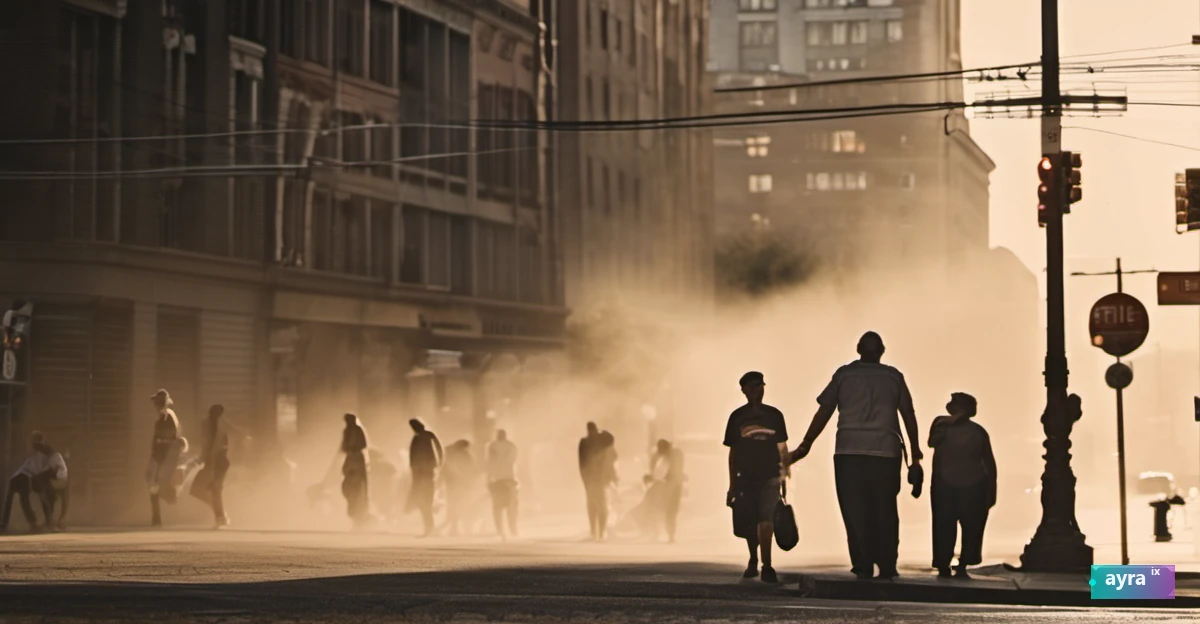
July 22, 2026 — Phoenix, Arizona. The National Weather Service issued its fourth consecutive "extreme heat warning" for metropolitan Phoenix at 5:00 AM. By 9:00 AM, the temperature had already passed 100°F. By 2:00 PM, it hit 118°F — not a record, but close enough that nobody was celebrating. Construction sites went silent by 10:00 AM. The city's light rail slowed to half speed to prevent rail buckling. Outdoor workers who couldn't afford to stop kept working anyway, because heat doesn't pause bills.
This is not a weather story. This is the new operating system of daily life in the summer of 2026 — a heat event so widespread, so persistent, and so indifferent to borders that it has essentially rewritten the social contract around what "normal" means. Climate change has stopped being a future problem. It's now a daily operational reality for schools, workplaces, sports leagues, public transit, and healthcare systems.
When the Thermometer Becomes Policy
In California, the state's heat insurance program — the first of its kind in the US — paid out its first claims this month to farmworkers who lost wages during mandatory heat breaks. In Texas, the grid operator issued three conservation alerts in one week, narrowly avoiding rolling blackouts by paying large industrial users to shut down. In the Pacific Northwest, where air conditioning was once a luxury, hospitals reported a 340% surge in heat-related emergency visits compared to the same week in 2020.
The common thread across every story is that the response is reactive, fragmented, and stunningly expensive. There is no national heat strategy in the United States. There are county-level emergency plans, state-level heat advisories, and a patchwork of workplace safety rules that vary wildly by jurisdiction. The federal government has no heat czar, no heat budget, and no legal framework for declaring a "heat emergency" the way it declares flood or hurricane disasters.
The Grid Was Not Built for This
Every heatwave is now a grid crisis. Air conditioning demand spikes, transmission lines lose efficiency in the heat, and power plants — especially natural gas and solar — see output degrade simultaneously. The result is a reliability squeeze that gets tighter every summer. The North American Electric Reliability Corporation's summer assessment, published in May 2026, flagged the Southwest, Texas, and the Midwest as "high risk" for energy emergencies. That assessment was barely a month old when this heatwave hit.
The irony is that the solution to heatwaves — more air conditioning — makes the underlying problem worse. AC units dump heat into outdoor air, creating urban heat island effects that raise nighttime temperatures. More AC means more electricity demand, which means more fossil fuel generation in most markets, which means more carbon, which means more heatwaves. It's a feedback loop that operates at the scale of civilization.
What Breaks First
Not everything breaks at once. That's the insidious thing about extreme heat as a threat — it doesn't arrive as a single catastrophic event. It arrives as a thousand small failures that compound.
- Education. Schools that close because they lack AC, or have AC but can't afford the electricity bill. Learning loss becomes heat loss.
- Logistics. Delivery drivers who can't work past noon. Supply chains that slow to a crawl during afternoon heat windows.
- Public health. Emergency rooms that divert ambulances because they're overwhelmed with heat cases — on top of their normal load.
- Infrastructure. Roads that buckle, rail lines that warp, data centers that throttle compute to stay within cooling budgets.
The question isn't whether any single system fails. The question is how many can fail at once before the social fabric tears.
The World Cup as Canary
This summer's World Cup — the first hosted across the US, Canada, and Mexico — was supposed to be a celebration of North American soccer infrastructure. Instead, it's become a live-fire exercise in heat-adapted event management. Matches in Dallas, Houston, and Phoenix were rescheduled to late evening slots. Cooling breaks were mandated at the 30-minute mark. FIFA installed misting systems in every stadium tunnel. Players collapsed on the pitch in multiple matches.
The World Cup will survive. It has the budget, the logistics, and the global audience to adapt. But it's a preview of every outdoor event, every workplace, every school that doesn't have those resources. The planet is too hot for normal life. The question is how fast we can build a new normal in its place.