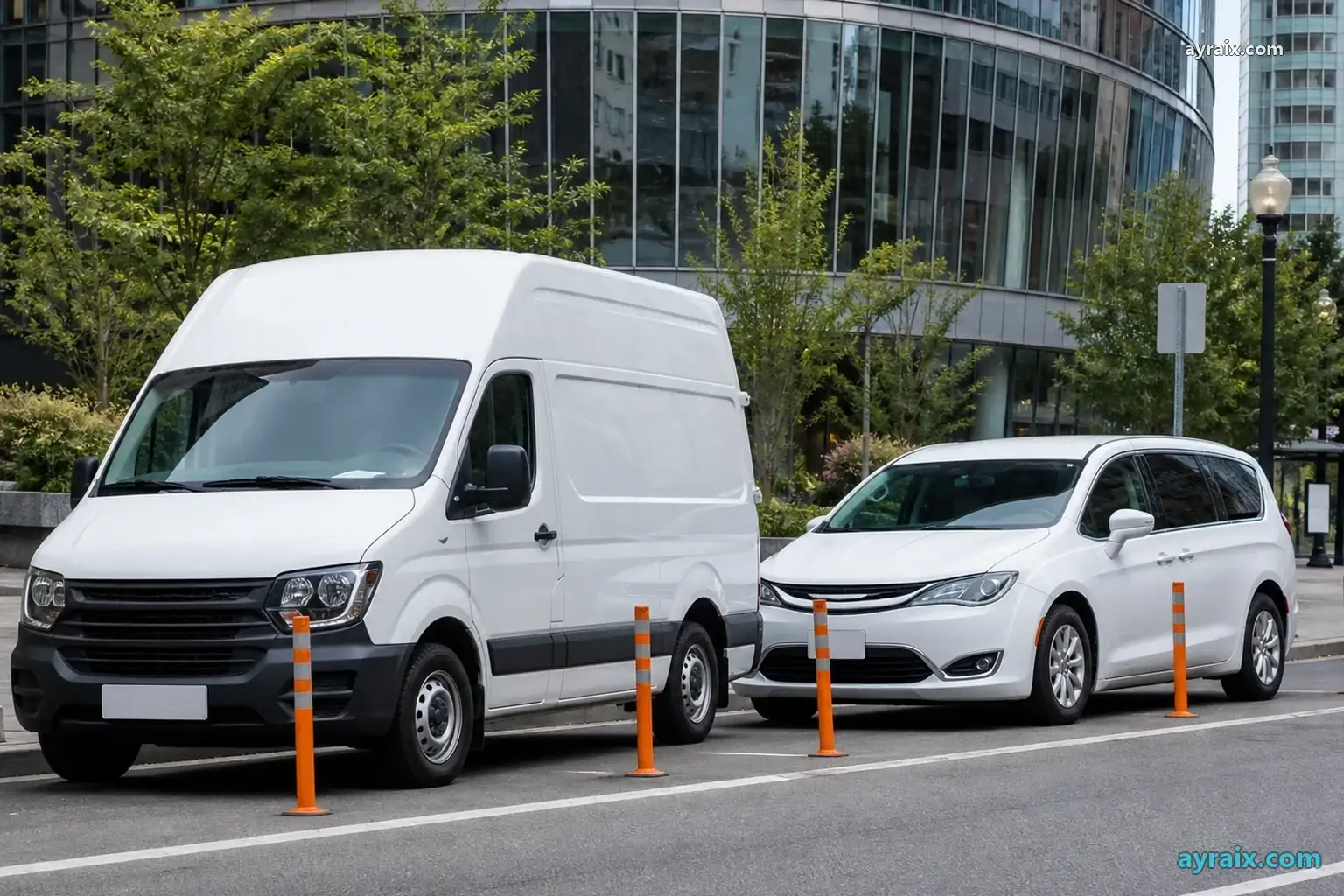
Composite — 6:40 a.m., parking lot outside a warehouse. A driver toggles two apps before the first ping. Benefits are a rumor; the phone is the shift supervisor. Platform labor law is no longer a single-state novelty. New York’s freelance protections are past the experiment phase; California’s Prop 22 fights keep reshaping what “independent” means on the curb; the EU Platform Work Directive is moving from text toward enforcement calendars. Exact docket timing shifts week to week — the durable story is cumulative cost pressure on the contractor model. Reclassification was never mainly a philosophy debate about status. It is an allocation fight: who pays for benefits, downtime, and risk when the app is the boss.
That cost stack is the whole fight. Health coverage, paid time off, workers' compensation, idle-time risk — the contractor model externalized them. Reclassification pulls them back onto platform P&Ls. The open question is not a dictionary definition of "employee"; it is what happens to prices, surge logic, and headcount when the externalization window closes.
The Thousand Cuts
The reclassification wave is not a single regulatory event. It is the accumulated effect of dozens of separate actions across multiple jurisdictions, each small in isolation, collectively reshaping the operating environment. New York's law requires platforms to provide written contracts, timely payment, and anti-retaliation protections for freelance workers. California's courts have narrowed the scope of contractor classification, forcing platforms to reclassify thousands of drivers. The EU directive creates a presumption of employment for platform workers, shifting the burden of proof to platforms to demonstrate that a worker is genuinely independent.

Each of these actions imposes compliance costs that the platform model was designed to avoid. The platforms have responded with a predictable playbook: litigation, ballot initiatives, operational restructuring, and price increases. But the cumulative effect of a thousand regulatory cuts is different from the effect of one. The platforms can win a lawsuit in California and lose one in New York. They can lobby successfully in one state and fail in another. The operating model becomes a patchwork of jurisdiction-specific compliance obligations that erode the scalability advantage that made the platform model profitable in the first place.
What Employee Status Actually Costs
The cost differential between a contractor and an employee is well understood in labor economics. Employer-side payroll taxes alone add approximately 7.65% to the cost of labor. Workers' compensation insurance adds 2-5% depending on the risk classification. Unemployment insurance taxes add another 1-3%. Health insurance contributions, when required, add 10-20%. Paid time off, sick leave, and family leave add another 5-10%. The total premium for employee status over contractor status is roughly 30-45% of base compensation.
For a platform like Uber or DoorDash, which spends billions annually on driver payouts, a mid-thirties-percent fully loaded cost swing is existential if it lands everywhere at once. Treat that band as labor-economics arithmetic, not a single audited company filing. The platforms have two responses: raise prices and reduce the number of workers. Both are already visible in markets where reclassification pressure bites. Ride-share and delivery prices in high-pressure jurisdictions have climbed in industry and press reporting — exact city percentages vary and should not be frozen as a universal “20–30% since reclassification” fact. Driver hours on the platform have been capped or cooled in several markets, reducing total supply. Platforms bet demand is inelastic enough that price increases cover the gap, and that reduced supply is offset by higher earnings per remaining driver. Early public signals are mixed: prices often up, driver take-home uneven, total hours contested. The industry shape that emerges is smaller, dearer, and more regulated.

The New Math of Platform Labor
The reclassification wave creates a new arithmetic for platform businesses. A driver who was previously available 60 hours per week as a contractor is now limited to 40 hours as an employee, with mandatory breaks, overtime pay, and scheduling constraints. The platform's labor pool, previously elastic and demand-responsive, becomes rigid and regulated. This changes the fundamental economics of the platform: the ability to match supply to demand in real time, which was the core innovation of the gig economy model, is constrained by the same labor regulations that govern every other industry.
The platforms have begun to adapt in ways that reveal their strategic priorities. Uber has invested heavily in autonomous vehicle technology, which would eliminate the driver cost base entirely. DoorDash has expanded its white-label logistics platform, shifting from a consumer-facing delivery service to a B2B infrastructure provider that does not employ delivery workers directly. Lyft has pivoted toward fleet management and subscription services. Each of these strategies reflects a bet that the contractor model is unsustainable and that the future of platform labor requires either automation, intermediary restructuring, or exit from direct consumer services. The platforms are not fighting reclassification because they want to preserve the contractor model. They are fighting it because they need time to build the post-contractor business model before the current one collapses.
Who Wins, Who Loses
The reclassification winners are not obvious at first glance. High-utilization drivers who work full time on a single platform benefit significantly from employee status: health insurance, paid time off, workers' compensation, and predictable scheduling. Low-utilization drivers who use the platform as a secondary income source lose: their flexibility is reduced, their access to the platform may be capped, and their per-mile earnings may decrease as platforms raise prices and reduce demand. The lobbying by gig economy platforms has focused on the second group — the part-time, flexible, multi-app driver — precisely because their loss is the most politically resonant argument against reclassification.
Composite beat that clarifies the wedge: the warehouse-lot driver who needs forty hours on one app wants the benefits stack; the parent who drives Saturday nights for grocery money wants the toggle. Both are “gig workers” in press language. Only one fits the employee template cleanly. Policy that pretends they are the same person will keep producing ballot fights and partial wins.
The real winners are the traditional competitors. Taxi companies, regulated for decades, have watched unregulated competitors capture market share by externalizing labor costs. Reclassification levels the playing field. Traditional logistics providers that employ their workers directly gain a competitive advantage when their platform competitors are forced to absorb the same costs. The losers, in the long term, are the consumers who pay higher prices and the low-utilization workers who lose access to flexible income. Whether those losses are acceptable depends on whether the social value of stable employment and comprehensive benefits outweighs the economic value of cheap, flexible labor. That is a political question, and the reclassification wave is a political answer.
What to watch: the next generation of platform business models. If the major platforms successfully transition to autonomous fleets or B2B infrastructure within five years, the reclassification battle will be remembered as a catalyst for the automation it was supposed to prevent. If they fail, the gig economy as we know it will shrink into a high-cost, low-volume niche — safer, fairer, and accessible to fewer people. Either way, the era of the independent contractor as the default labor model for platform work is ending.