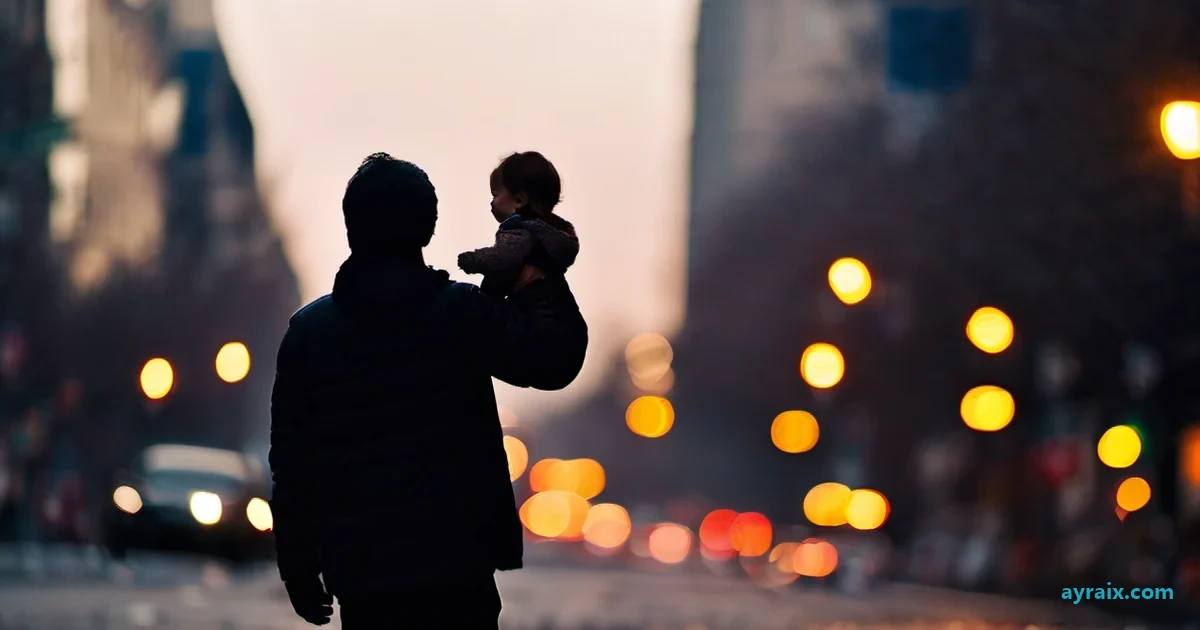
A question before we start. A baby looked at a streetlight. For the first time in her life. Night, a quiet street in St. Louis, a father holding her up toward the glow — and she did the thing babies do when they can't believe what they're seeing: she kicked her feet, she squealed, she shook her head, over and over, like she was trying to say that can't be real, that can't be real.
The internet showed you. You stopped scrolling. Tens of millions of people stopped scrolling. So here's the question before we get to the medicine, the genetics, the data — why did you stop? Not why did everyone stop. Why did you. Hold that thought. The whole story is in the answer.
Ask yourself, honestly: in a feed built to feed you a stranger's worst day, in the same five minutes you'd normally spend on something awful — you stopped for a baby and a streetlight. That is either the algorithm doing something it doesn't usually do, or you being something the algorithm doesn't usually need you to be. Both of those are worth understanding.
Born July 4th. Perfect on paper.
The baby is Violet Paul, born July 4th, 2025, in the US Midwest. Her mother, Madison Mitchell, 24, her father Steven Paul, 30. The pregnancy was, by every measure available, perfect. The ten-week genetic screening — the NIPT — came back: a perfectly healthy baby girl. Every ultrasound after that: perfect. Head, heart, limbs, all normal. Violet was born with deep, dark blue eyes — the kind of blue that made the nurses comment. Madison told Newsweek her daughter had "the most beautiful eyes." She wasn't wrong. She just didn't know yet why they were beautiful.
Violet opened her eyes for the first time at delivery. That's when the room went quiet. Not because of the usual newborn chaos — because the eyes she opened weren't eyes the room recognized. No color in them. No visible iris at all. And when the doctors looked closer, something worse: both corneas, clouded.
The day everything changed
Here's the diagnosis, and it takes a minute to sit with, so take a minute. Violet was born with aniridia — she has no irises. The colored part of the eye doesn't develop. It's rare — about one in 50,000 births — and it comes from a mutation in the PAX6 gene, the gene that shapes the eye starting in the first trimester of pregnancy. That's the first thing the prenatal tests missed, and it's worth filing away: standard prenatal screening does not look for this gene.
And aniridia was only half of it. Violet also had congenital glaucoma — the "old person's disease," the thing that steals sight from people in their seventies — and hers had been building pressure on her optic nerve since before she was born, in utero. By delivery, both corneas were entirely clouded. The brain can't build sight from nothing, and her brain had never been given anything. Violet was blind. The parents who'd been told for ten months that everything was perfect were told, in a single afternoon, that their daughter would likely never see.
"She'd be lucky to see a ceiling light."
The doctors were honest, which was brutal. They told the parents Violet would be lucky to see a ceiling light, ever. They laid out the options — multiple surgeries, possibly a cornea transplant — none of them certain. The parents chose surgery anyway. When Violet was two weeks old, surgeons at the University of Iowa performed a trabeculectomy on her eyes — the operation that drains fluid to relieve pressure, an operation routinely done on people sixty and older. On a fourteen-day-old. It was her first surgery. It was, as it turns out, her only one: the glaucoma has been under control since, and a single operation, at two weeks old, is the whole surgical story.
Recovery was not a montage. Violet's eyes were still extraordinarily light-sensitive, and the world she was healing into was not built for her. For months, she lived in a dark living room — the family kept the ceiling lights off in their own home because the light hurt her. Going outside during the day wasn't possible; the sun was too much. Madison kept the curtains drawn, kept the rooms dim, kept a one-year-old who'd had her eyes cut open entertained in near-darkness. That was the whole world: a dark living room.
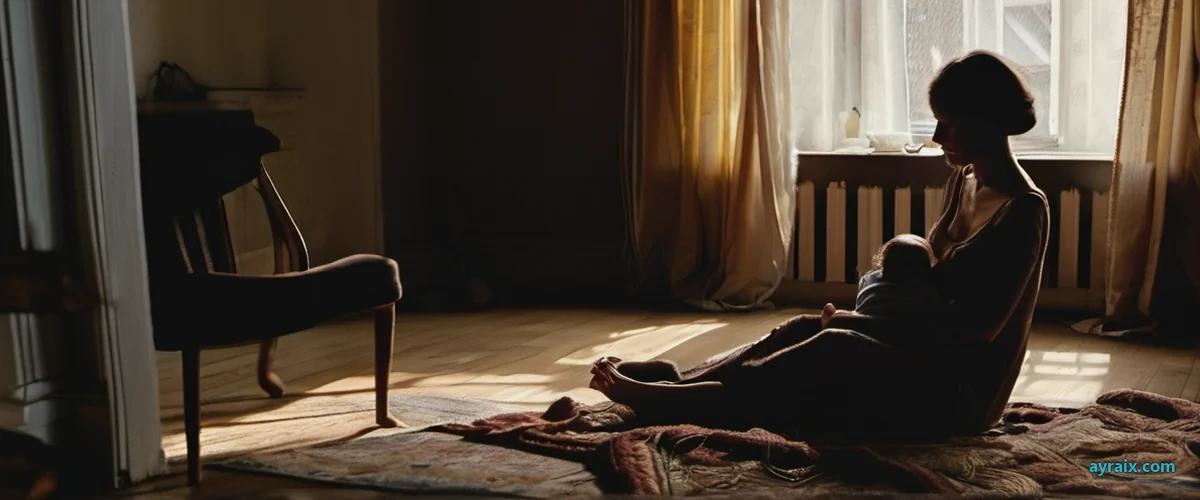
Now, the question from the video, in the right context: how many times today did you glance out a window — and not think about it? Not "appreciate" it. Not "stop for it." Just... look through it, at sky and light and street, and move on. Whatever your answer is, it's a number that would have sounded like a miracle to Madison Mitchell in that living room. That's the whole distance this story travels. Keep it in mind.
Early April. St. Louis. Night.
One night in early April 2026, the family took Violet out after dark — evening, city lights on, sun down. Her dad carried her, and they walked a quiet street in St. Louis. And Violet — a year old, months of ceiling lights-off, a girl whose doctors said she'd be lucky to see a ceiling light — saw the streetlights. For the first time.
What happened next is the video everyone stopped for: her legs kicking, her voice squealing, her head shaking side to side with the pure, unscriptable joy of a creature seeing light for the first time. Her mom said she was "so happy and awestruck" — and there's a grown-up word in there worth noticing. A one-year-old. Awestruck by a streetlight. Madison also explained why they'd chosen night: "It's bigger than taking her out at day because she's sensitive to the sun." The walk was a medical accommodation. It became the most-watched act of wonder on the internet.
What the data actually proves
Let's be precise about what this story proves, because the viral version blurs it. Aniridia is genetic — a PAX6 mutation that begins its work in the first trimester. It is not looked for by standard prenatal screening, which is why ten perfect checkups produced zero warning. A genetic test for this specific gene would have caught it; nobody runs that test on a normal pregnancy, because a condition this rare doesn't make the panel. That's not a failure of anyone in particular — it's the arithmetic of rare disease: you can't screen for everything, and the things you don't screen for get discovered the hard way.
Here's the part of the data that sticks. Most children with rare conditions never get a name for what they have. Violet has one — aniridia, one in fifty thousand, PAX6, trabeculectomy, all of it. It's a sentence she'll be able to say her whole life. So the question the data asks you is quietly brutal: how many rare diseases do you know by name? One? Two? Violet has a name for hers. Most kids don't get that. That's not medicine's failure — it's just how rare the rare is.
One surgery. That's it.
Now the second half of the story, because it's the half people skim. Last July, Violet's parents were told to plan for a life of darkness. This July — July 4th, 2026, her first birthday — Violet watched fireworks. Sitting outside, at night, watching light bloom across the sky — light her own doctors said she would never see. Madison's words: the doctors told her "it's not often they get to be surprised in this way with their patients." The doctors who'd given the ceiling-light prognosis were the same doctors watching a one-year-old watch fireworks. And the mother who'd spent six months in a dark living room said the whole thing plainly: "We are raising a living miracle."

And it kept going. Around nine months after the diagnosis, the family took Violet on a Caribbean cruise — the trip, Madison said, was "the biggest answered prayer" — and called the whole thing what it is: "raising a living miracle." She needed six months to work up the courage to post Violet's story to TikTok. She said she was "scared of how mean the internet can be." Instead, strangers embraced Violet — and Madison said the aftermath changed something for the family: "We don't feel so isolated anymore." A family that spent a year in a dark living room, alone, got the whole internet on their side. File that, too. It matters for what comes next.
The uncomfortable part
Here's where the story turns on you a little, and it should. The same feed that showed you Violet — that carried her, that hugged her family — is the same feed that showed the world a stranger's worst day: a video that drew 77 million views in less than a day before the woman in it had to take it down, according to the Bangkok Post, which wrote the headline the internet deserved: "The video that got all of Thailand talking." A person's worst moment, millions of views an hour, memes made from the objects in the room. That's the feed at its most reliable. Then — once in a while — a baby and a streetlight breaks through, and you stop.
There's a version of this you already believe: the algorithm is built to keep us at our worst. It's a strange sentence to agree with and it's mostly true — anger is cheap to produce, cheap to share, and endlessly abundant, so the feed gets great at it. But here's the thing the cynic in you is wrong about: you stopped for the baby anyway. Not because the algorithm asked. The algorithm was showing you the same stuff it always shows you. You chose the wonder. Which means the feed isn't the whole story — you're part of the equation. What does it say about you that you stopped?
The uncomfortable question, stated plainly: the same feed showed you the worst of us and the best of us, and you stopped for the baby. So maybe the algorithm isn't keeping us at our worst. Maybe it's keeping us at our easiest — and once in a while, we refuse the easy thing and stop for the real thing. The question isn't what the feed did. The question is what you do with the thing you stopped for.
She got the light. You got the question.
So, the argument, in full. Violet is one surgery — at two weeks old, an operation usually done on people sixty years older. One family — who spent months in a dark living room so their daughter could heal. One night — a quiet street in St. Louis, a father holding his baby up to a streetlight. And one universe of luck — because glaucoma that's caught early, with one surgery, and then holds, is a lottery ticket that almost nobody gets to cash.
She got the light. The rest of us — we get the question. If a streetlight could do that to a baby who was born in the dark... what are you missing? Not "what are you ignoring." What are you missing — what is passing through your field of view today, the way streetlights passed through hers for a year, that you haven't seen? The walk you've done a thousand times. The face that's always been there. The thing you looked through a window at this morning and did not think about. She had to be cut open to see what you walk past.
So here it is, the whole piece in one sentence: the internet showed you a baby who saw a streetlight for the first time — and you stopped. Violet got the light. You got the evidence. What did you see today that you didn't see? Go look. It's closer than you think, and it's been there the whole time.
Share your argument — ayraix dot com. Trendz.